Your AC isn't working. Try these first.
Before you call a technician, run through a few quick checks. A lot of AC "problems" are actually simple fixes—a dirty filter, a thermostat issue, or the power is off. This guide walks you through the most common ones.
What Utah homeowners say
Real 5-star Google reviews from neighbors across Utah County and the Salt Lake Valley.
"My AC stopped working mid-summer and Mackay diagnosed it quickly and explained everything in a way that made sense. He replaced the blower motor and capacitor, cleaned the system, and got it running again. What I appreciated most was the honesty — he educated me on what was needed and what to expect, with no pressure or sales tactics. Communication was excellent, the work thorough, the pricing fair. Highly recommend."
"Great experience with Max Mechanical Services. They were professional, on time, and explained everything clearly. The work was done efficiently and my system is running perfectly now. Highly recommend!"
"Mackay was able to help us very promptly, and answered all our questions which put me very at ease. Would definitely recommend him anytime!"
Most AC issues fall into a few categories: power/thermostat, airflow restrictions, or something mechanical. Start at the top and work your way down. If nothing works, that's when a technician comes in.
1. Check the Basics First
Seriously—I'd estimate 30% of the "emergency" service calls we get are because the thermostat is off, set to heat instead of cool, or the power got cut.
🔌 Is the Power On?
Check your breaker box. Look for the breaker labeled for your AC unit—it might be labeled "AC," "Conditioner," or with an amperage like "30A" or "60A."
- Go to the breaker box (usually in the garage, basement, or utility closet)
- Look for the AC breaker—it should be in the ON position (straight up)
- If it's OFF (at an angle) or in the middle, flip it fully to ON
- Try running your AC. Does it work now?
🌡️ Check Your Thermostat
A misconfigured thermostat stops your AC faster than anything else. Let's verify it's set correctly.
- Look at your thermostat. Is it set to COOL (not HEAT, EMERGENCY, or OFF)?
- Is the temperature setting below the current room temperature? (e.g., set to 72°F but it's 76°F in the house)
- Check the fan setting—AUTO or ON both work. AUTO is usually better.
- If you changed anything, wait 5 minutes and listen for the outdoor unit to turn on.
Smart thermostat tip: Some smart thermostats have "cooling schedules" or "vacation mode" that override manual settings. Check your app or settings screen if the basics look right but AC still won't run.
🔋 Replace the Thermostat Batteries
Wireless thermostats run on batteries. A dead battery means your thermostat stops communicating with the AC unit.
- Pull your thermostat off the wall (usually just pops off)
- Look for low battery warning on the screen
- Replace the batteries (usually AA or AAA)
- Reinstall the thermostat and wait for the system to initialize
2. Check Airflow & Filters
A clogged air filter is probably the #1 reason AC "isn't working"—it's really just not cooling well because airflow is strangled.
💨 Dirty Air Filter
Your AC pulls air through a filter before it circulates through your home. A filthy filter blocks airflow, making the system work harder and cool worse.
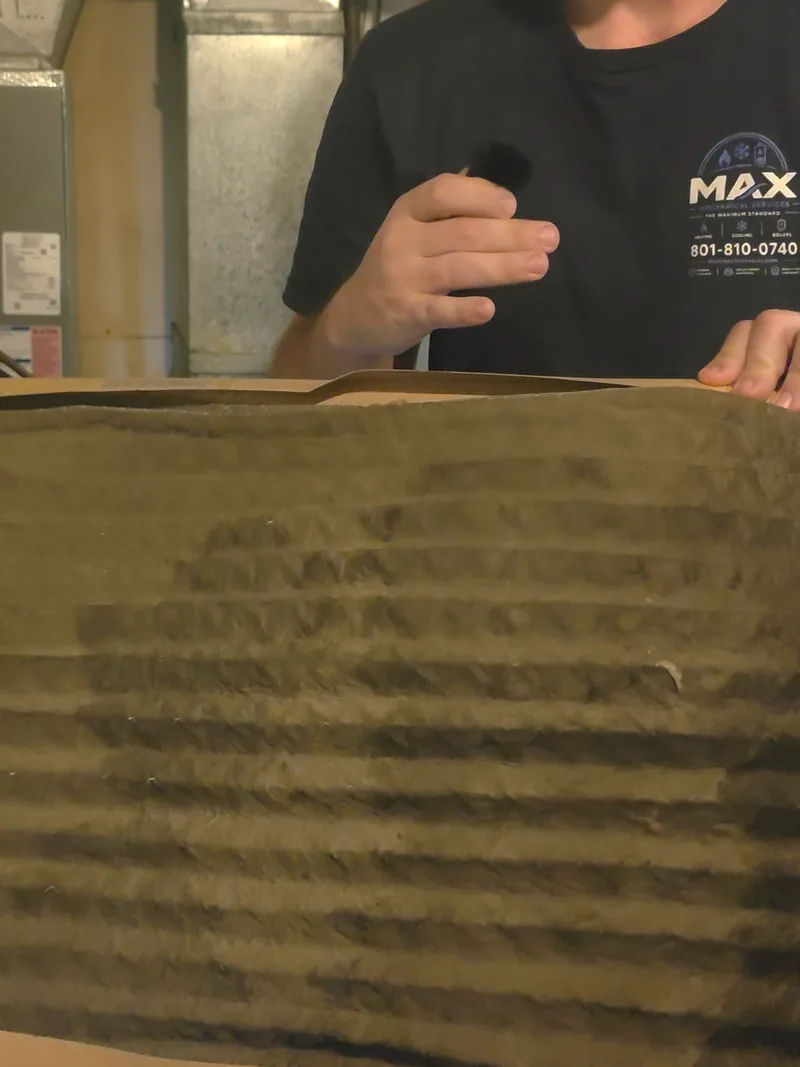
- Locate your air filter. Usually it's in a return vent on a wall/ceiling, in the air handler (furnace closet), or under the stairs.
- Pull the filter out and hold it up to light. Can you see through it easily?
- If it's dark/caked with dust, it needs replacing. 20x25x1 or 16x25x1 are common sizes.
- Grab a new filter from any hardware store—about $15–$25
- Slide the new one in the same direction the old one was facing (check the arrow on the frame)
🌬️ Return Vents Blocked
Your AC needs to pull air from your home to cool it. Blocked return vents mean the system can't do its job.
- Look for large vents on walls or ceilings (bigger than regular supply vents)
- Check if furniture, curtains, or doors are blocking them
- If you find one blocked, move whatever's in the way
- Also check the cold air return vent in your hallway or closet—make sure it's not blocked by clothes or boxes
3. Check the Outdoor Unit
Your AC has two parts: an indoor unit (air handler or furnace) and an outdoor unit (condenser). If the outdoor unit isn't running, nothing cools.
🔊 Is the Outdoor Unit Running?
Go outside and listen at the condenser unit (the big box on the side/back of your house).
- Set your thermostat to COOL and set it to a low temperature (like 68°F)
- Go outside and approach the condenser unit
- Listen for a humming or buzzing sound. Feel for warm air being exhausted from it?
- Look for a fan blade turning inside (be careful—don't stick anything in it)
🍃 Condenser Coils Clogged
Dirt, leaves, and debris clog the outdoor unit's coils, killing cooling efficiency.
- Shut off the breaker to the AC first (safety first)
- Look at the outdoor unit. Is it covered in leaves, dirt, or debris?
- Use a soft brush or low-pressure hose to gently rinse away dirt on the fins
- Don't use high pressure—you can bend the fins and make it worse
- Turn the breaker back on and test your AC
4. When to Call a Technician
If you've checked all of the above and the AC still isn't cooling, it's time for a pro. Here are the signs:
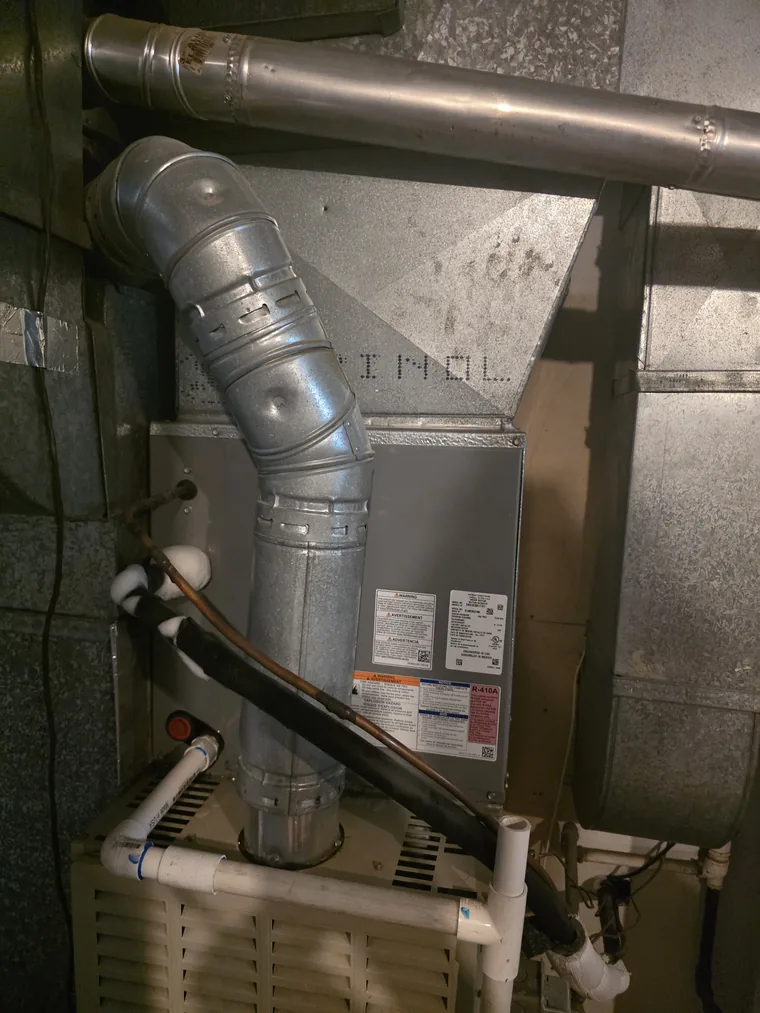
- • No cold air coming from any vent (filter is clean, vents are open)
- • Weak airflow even after filter replacement
- • Water pooling under the indoor unit or dripping from vents
- • Strange noises (squealing, grinding, rattling) from the outdoor unit
- • Breaker keeps tripping after you flip it back on
- • Outdoor unit not running (no hum, no fan, nothing)
- • Burning smell or unusual odors
- • High electric bills but AC isn't cooling any better
Real talk: We'd rather you call us and we tell you "your filter just needs changing" than have you guess wrong. No judgment. We're here to help.
Still not cooling after trying these steps?
Call us. We'll diagnose it fast and give you an honest quote. No diagnostic fee if you go ahead with the repair.
Pick your own appointment time
Skip the phone tag. See what is actually open on our schedule and lock in a time in about a minute — no waiting on a callback to find out when we can be there.
- Real openings on our live calendar — instant confirmation
- $0 diagnostic fee when we complete the repair
- Evening and weekend slots available
Rather talk it through? Call 801-810-0740 or send a text.
Get your honest quote
Quick callback. Fair price. No obligation.
Still Stuck? Request Service
Fast callback. Honest quote. No obligation.
Thank you — request received!
We'll call you back shortly. Need help now? Call 801-810-0740.
AC repair when you need it. Honest help, fair price.
Whether you fixed it yourself or need professional help, we're here. Same-day or next-day appointments. Licensed, insured, and honest.